
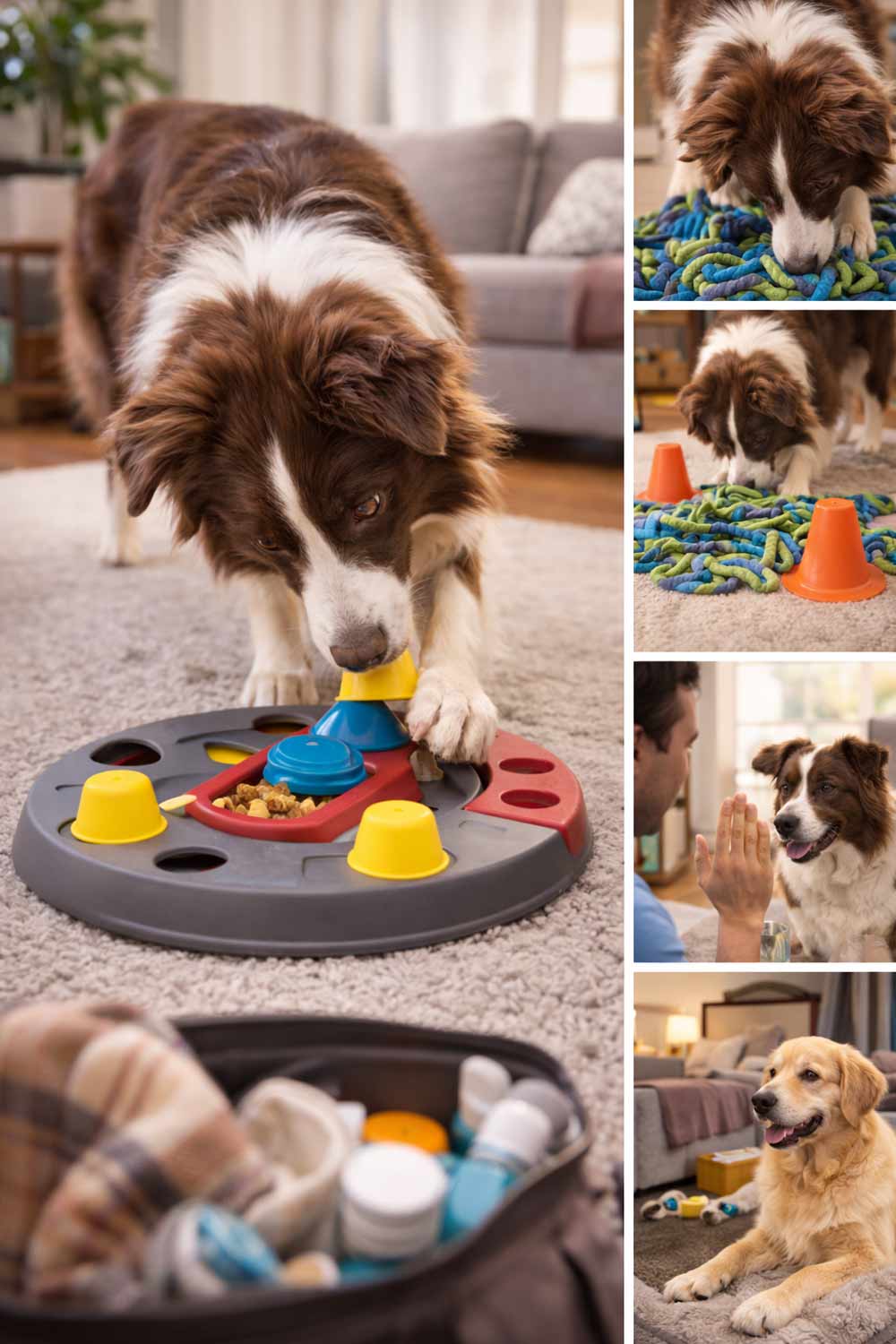
Dog mental stimulation involves providing activities and challenges that engage your pet’s cognitive abilities, helping prevent boredom and promote overall well-being. The key to keeping your dog mentally stimulated lies in offering variety through puzzle toys, training exercises, scent games, and environmental enrichment that challenges their natural instincts and problem-solving abilities.
Mental exercise is just as important as physical activity for your dog’s health and happiness. When dogs lack adequate mental stimulation, they may develop unwanted behaviors like excessive barking, destructive chewing, or restlessness. By incorporating regular enrichment activities into your dog’s routine, you can help them stay engaged, reduce stress, and strengthen your bond together.
What Dog Owners Should Know
Understanding the importance of dog mental stimulation starts with recognizing that our canine companions are intelligent creatures with natural instincts that need outlets for expression. Dogs were originally bred for specific jobs, from hunting and herding to guarding and retrieving. When modern pets don’t have opportunities to use these innate abilities, they can become mentally understimulated.
Research from Early Neurological Stimulation Dogs studies shows that mental challenges help develop neural pathways and can improve a dog’s ability to handle stress throughout their life. Regular mental exercise can also slow cognitive decline in senior dogs and help maintain their quality of life as they age.
Signs that your dog may need more mental stimulation include excessive barking, destructive behaviors, restlessness despite adequate physical exercise, attention-seeking behaviors, and apparent boredom or listlessness. Some dogs may also develop repetitive behaviors or show increased anxiety when they’re not mentally engaged.
Different breeds have varying mental stimulation needs. Working breeds like Border Collies, German Shepherds, and Belgian Malinois typically require more complex mental challenges than companion breeds. However, all dogs benefit from some form of cognitive engagement, regardless of their size or breed background.
What You Can Do at Home
Creating effective dog enrichment activities at home doesn’t require expensive equipment or extensive training. Start with simple puzzle feeders that make mealtime more engaging. You can use a muffin tin with tennis balls placed in each cup, hiding kibble underneath, or freeze wet food in Kong toys for a longer-lasting mental challenge.
Scent work provides excellent mental exercise for dogs, as their sense of smell is their primary way of exploring the world. Hide treats around your home or yard and encourage your dog to “find it.” Start easy and gradually increase the difficulty. You can also teach your dog to identify different scents by placing treats in small containers and letting them use their nose to locate the reward.
Training sessions offer dual benefits of mental stimulation and improved behavior. Even five to ten minutes of practicing basic commands or learning new tricks can provide significant mental exercise. Consider teaching your dog practical skills that can enhance your daily routine, such as techniques covered in How to Train Your Dog to Walk on a Loose Leash.
Environmental enrichment plays a crucial role in keeping dogs engaged. Rotate your dog’s toys weekly to maintain novelty, create obstacle courses using household items, or set up supervised exploration opportunities in new, safe environments. For more comprehensive ideas, consider implementing strategies from How to Create an Enriching Environment for Your Dog.
Interactive toys specifically designed for mental stimulation can be valuable investments. Puzzle toys with sliding pieces, treat-dispensing balls, and snuffle mats that encourage foraging behaviors can keep dogs occupied for extended periods. The Enrichment for Dogs Tips resource from Ohio State University Veterinary Medical Center provides additional guidance on selecting appropriate enrichment tools.
Consider incorporating mental challenges into physical activities. Teaching your dog to navigate agility courses, practice recall training in safe areas as outlined in How to Train Your Dog for Off-Leash Adventures, or engaging in structured play sessions can provide both physical and mental benefits simultaneously.
When to Call Your Vet
While most behavioral changes can be addressed through increased mental stimulation, certain signs may indicate underlying health issues that require veterinary attention. Contact your veterinarian if your dog shows sudden changes in behavior, including increased aggression, excessive lethargy that doesn’t improve with mental enrichment, or repetitive behaviors that seem compulsive rather than simply boredom-related.
If your dog appears disoriented, confused, or shows signs of cognitive dysfunction such as getting lost in familiar places, staring at walls, or significant changes in sleep patterns, these may indicate medical conditions rather than simple boredom. Senior dogs may experience cognitive decline that requires professional evaluation and specialized care, including dietary considerations covered in Understanding Senior Dog Nutrition: Feeding Your Aging Pet.
Persistent destructive behaviors that don’t improve with increased mental stimulation might indicate anxiety disorders, medical discomfort, or other behavioral issues that benefit from professional intervention. A veterinary behaviorist can help develop a comprehensive treatment plan that addresses both medical and behavioral aspects of your dog’s needs.
Additionally, if you’re planning to travel with your dog and want to ensure they remain mentally stimulated during the journey, consult resources like Dog-Friendly Travel: Tips for a Smooth Journey for practical guidance, but speak with your vet if your dog shows excessive stress or anxiety during travel preparation.
Building on these habits takes consistency — How to Safely Introduce Your Dog to New Pets covers complementary training techniques that reinforce what you’re working on here.
Enrichment works best as a system — How to Keep Your Dog Active in Winter: Tips and Activities covers a related approach that pairs well with what’s described here.
FAQ
What are some signs that my dog needs more mental stimulation?
Common signs include excessive barking, destructive chewing, restlessness despite adequate exercise, attention-seeking behaviors, and general boredom or listlessness. Some dogs may also develop repetitive behaviors or show increased anxiety when mentally understimulated.
How often should I engage my dog in mental exercises?
Most dogs benefit from some form of mental stimulation daily. This can be as simple as a five-minute training session, puzzle feeding, or scent games. The frequency and intensity should match your dog’s age, breed, and individual energy levels.
Are there specific toys that promote mental stimulation?
Yes, puzzle toys with moving parts, treat-dispensing balls, snuffle mats, and interactive feeders are excellent options. Rotate toys regularly to maintain novelty and interest. Simple household items like muffin tins with tennis balls can also create effective puzzle feeders.
Can mental stimulation help with behavioral issues?
Mental stimulation can help address many behavioral problems caused by boredom or excess energy. However, persistent issues may require professional evaluation to rule out underlying medical conditions or develop comprehensive behavior modification plans.
This article is for educational purposes only and is not intended to replace professional veterinary advice. Always consult with your veterinarian regarding your dog’s specific health and behavioral needs, especially if you notice sudden changes in behavior or signs of distress.
Disclaimer: This article is educational and not a substitute for professional veterinary advice.
Owner Action Checklist
When managing concerns related to dog mental stimulation, use a calm, step-by-step approach. Practical monitoring and timely veterinary communication are usually more useful than waiting for signs to become severe.
- Check dog mental stimulation regularly and track any meaningful changes over time.
- Check dog enrichment activities regularly and track any meaningful changes over time.
- Check keeping dogs engaged regularly and track any meaningful changes over time.
- Check mental exercise for dogs regularly and track any meaningful changes over time.
How to Reduce Risk Going Forward
Prevention starts with consistency. Build routines that lower exposure to common triggers linked to dog mental stimulation, and review your dog’s daily environment for avoidable hazards. Small routine upgrades can meaningfully reduce future risk.
If your dog has repeated episodes, ask your veterinarian about a personalized prevention plan, including diet, activity adjustments, home-environment changes, and follow-up timing.
Related concerns owners often research include dog enrichment activities, keeping dogs engaged, mental exercise for dogs. Addressing these questions early helps prevent complications and confusion.
For dog mental stimulation, keep your response practical and consistent. Focus on what changed recently, what symptoms appeared first, and whether your dog is improving or getting worse. Reliable observations are often more useful than guessing the exact cause.