
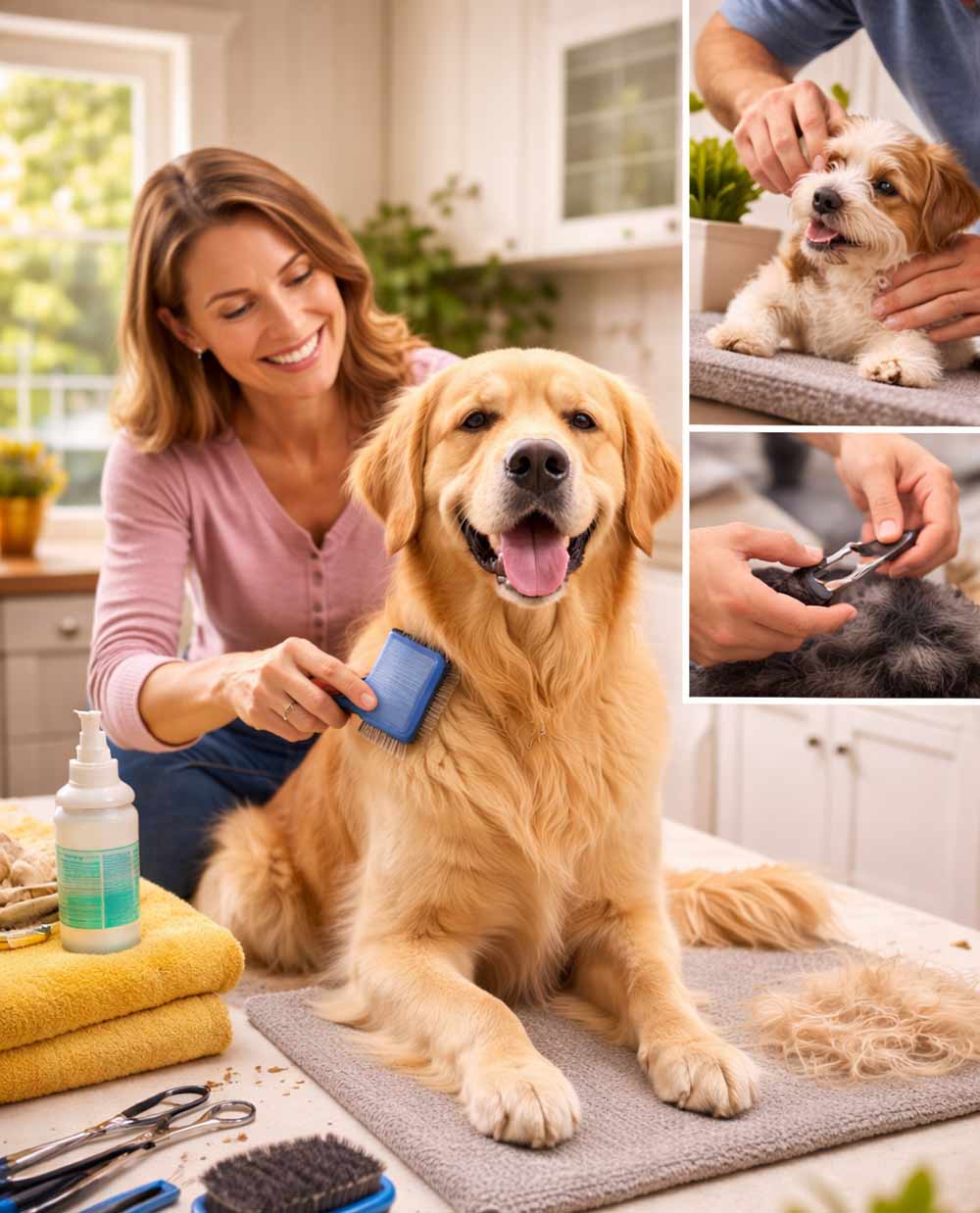
Regular grooming is one of the most important aspects of responsible dog ownership, helping maintain your pet’s health, comfort, and appearance. Essential dog grooming tips include brushing your dog’s coat regularly, trimming nails monthly, cleaning ears weekly, and brushing teeth several times per week. These basic practices prevent matting, reduce shedding, and help you spot potential health issues early.
Proper grooming goes beyond making your dog look good—it’s a vital part of preventive care that strengthens the bond between you and your pet while keeping them comfortable and healthy. Whether you have a long-haired breed that requires daily attention or a short-coated dog with simpler needs, understanding the fundamentals of dog grooming will help you provide the best care possible.
What Dog Owners Should Know
Dog grooming encompasses more than just occasional baths and brushing. It’s a comprehensive approach to maintaining your pet’s physical health and comfort. Regular grooming helps prevent skin conditions, reduces the risk of infections, and allows you to monitor your dog’s overall condition.
Different breeds have varying grooming requirements based on their coat type, size, and lifestyle. Double-coated breeds like Golden Retrievers need more frequent brushing to prevent matting and manage seasonal shedding, while short-haired breeds like Beagles require less intensive coat care but still benefit from regular maintenance.
The importance of regular grooming extends beyond aesthetics. It helps distribute natural oils throughout your dog’s coat, removes dead hair and skin cells, and provides an opportunity to check for lumps, cuts, or other abnormalities. Early detection of these issues can be crucial for your pet’s health.
Understanding your dog’s specific needs is essential when choosing the right dog breed for your family, as grooming requirements should factor into your decision-making process. Some breeds require professional grooming every 6-8 weeks, while others can be maintained primarily at home.
What You Can Do at Home
Establishing a regular grooming routine at home is both cost-effective and beneficial for strengthening your relationship with your dog. Here are the essential dog grooming techniques every owner should master:
Essential Grooming Tools
Having the right grooming tools for dogs makes the process easier and more effective. Your basic toolkit should include:
- A quality brush or comb suitable for your dog’s coat type
- Nail clippers designed for dogs
- Dog-specific shampoo and conditioner
- Cotton balls or pads for ear cleaning
- Dog toothbrush and toothpaste
- Towels specifically for pet use
- Scissors for trimming hair around paws and face
Brushing and Coat Care
Regular brushing is the foundation of good grooming. Brush your dog’s coat at least 2-3 times per week, or daily for long-haired breeds. Start slowly if your dog isn’t used to being brushed, using gentle strokes and offering treats as positive reinforcement.
Pay special attention to areas where matting commonly occurs, such as behind the ears, under the legs, and around the tail. If you encounter small mats, work them out gently with your fingers or a dematting tool. Never try to cut out mats with scissors unless you’re experienced, as you risk injuring your dog.
Nail Trimming
Trim your dog’s nails every 3-4 weeks or when you hear them clicking on hard surfaces. Cut only the white or clear portion of the nail, avoiding the pink quick inside. If you accidentally cut the quick, apply styptic powder to stop bleeding and comfort your dog.
Ear Cleaning
Clean your dog’s ears weekly using a veterinarian-approved ear cleaning solution. Gently wipe the outer ear with a cotton ball, but never insert anything deep into the ear canal. Dogs with floppy ears or those who swim frequently may need more frequent cleaning.
Dental Care
Brush your dog’s teeth 2-3 times per week using dog-specific toothpaste. Never use human toothpaste, as it can be toxic to dogs. Start by letting your dog taste the toothpaste, then gradually introduce the brush.
Bathing
Most dogs need baths every 4-6 weeks, though this varies based on coat type, lifestyle, and skin conditions. Use lukewarm water and work the shampoo in thoroughly, avoiding the eyes and ears. Rinse completely to prevent skin irritation from soap residue.
For older dogs who may have mobility issues, consider how senior dog mobility tips can help make grooming sessions more comfortable and less stressful.
When to Call Your Vet
While many grooming tasks can be handled at home, certain situations require professional veterinary attention. Contact your veterinarian if you notice:
- Persistent skin irritation, redness, or unusual odors
- Excessive scratching or signs of discomfort during grooming
- Changes in skin color or texture
- Lumps, bumps, or growths you haven’t noticed before
- Excessive ear discharge, odor, or signs of infection
- Difficulty opening your dog’s mouth or signs of dental pain
- Bleeding that doesn’t stop after minor grooming accidents
- Severe matting that can’t be safely removed at home
Some dogs experience anxiety during grooming sessions, which may require professional help or behavioral modification. If your dog shows extreme stress, aggression, or fear during grooming, consult with your veterinarian about managing anxiety and consider professional grooming services.
Additionally, be aware that weather effects on dog behavior can impact your pet’s tolerance for grooming activities, and you may need to adjust your routine accordingly.
Related reading: The Best Dog Breeds for Apartment Living
Related reading: Essential Tips for Crate Training Your Dog
For owners building a more engaging daily routine, Dog-Friendly Travel: Tips for a Smooth Journey explores a connected enrichment topic worth considering.
Related reading: Essential Grooming Techniques for Long-Haired Breeds
Grooming is rarely just one task — regular grooming covers a related area of care that often goes hand in hand with this.
Grooming is rarely just one task — How to Groom Your Dog at Home: A Step-by-Step Guide covers a related area of care that often goes hand in hand with this.
FAQ
How often should I groom my dog?
The frequency depends on your dog’s breed and coat type. Most dogs benefit from brushing 2-3 times per week, with baths every 4-6 weeks. Long-haired breeds may need daily brushing, while short-haired dogs might only need weekly attention. Nail trimming should occur every 3-4 weeks, and ear cleaning weekly.
What tools do I need for grooming?
Essential grooming tools include a brush or comb appropriate for your dog’s coat, nail clippers, dog shampoo, cotton balls for ear cleaning, and a dog toothbrush with pet-safe toothpaste. Additional tools like dematting combs or thinning shears may be helpful depending on your dog’s specific needs.
Can I groom my dog myself?
Yes, most basic grooming tasks can be performed at home with proper tools and techniques. However, some breeds require professional grooming for coat trimming and styling. Start with simple tasks and gradually build your skills and your dog’s comfort level with the process.
What are the signs my dog needs professional grooming?
Consider professional grooming if your dog has severe matting you can’t safely remove, needs breed-specific styling, shows signs of skin problems during home grooming, or becomes extremely stressed or aggressive during grooming sessions. Professional groomers have the expertise and tools to handle challenging situations safely.
Remember that some dogs may be more sensitive to grooming activities, especially in certain social situations. Understanding your dog’s comfort level in different environments, such as dog parks and social settings, can help you better manage their stress during grooming sessions.
Disclaimer: This article provides educational information about dog grooming and should not replace professional veterinary advice. Always consult with your veterinarian for specific concerns about your pet’s health, skin conditions, or grooming needs. If you notice any unusual symptoms or changes in your dog’s condition during grooming, seek professional veterinary care promptly.
Disclaimer: This article is educational and not a substitute for professional veterinary advice.
Owner Action Checklist
When managing concerns related to dog grooming tips, use a calm, step-by-step approach. Practical monitoring and timely veterinary communication are usually more useful than waiting for signs to become severe.
- Check dog grooming tools regularly and track any meaningful changes over time.
- Check grooming techniques regularly and track any meaningful changes over time.
- Check common grooming issues regularly and track any meaningful changes over time.
- Check importance of regular grooming regularly and track any meaningful changes over time.
How to Reduce Risk Going Forward
Prevention starts with consistency. Build routines that lower exposure to common triggers linked to dog grooming tips, and review your dog’s daily environment for avoidable hazards. Small routine upgrades can meaningfully reduce future risk.
If your dog has repeated episodes, ask your veterinarian about a personalized prevention plan, including diet, activity adjustments, home-environment changes, and follow-up timing.
Related concerns owners often research include how to groom a dog, dog grooming essentials, grooming tools for dogs. Addressing these questions early helps prevent complications and confusion.
For dog grooming tips, keep your response practical and consistent. Focus on what changed recently, what symptoms appeared first, and whether your dog is improving or getting worse. Reliable observations are often more useful than guessing the exact cause.