
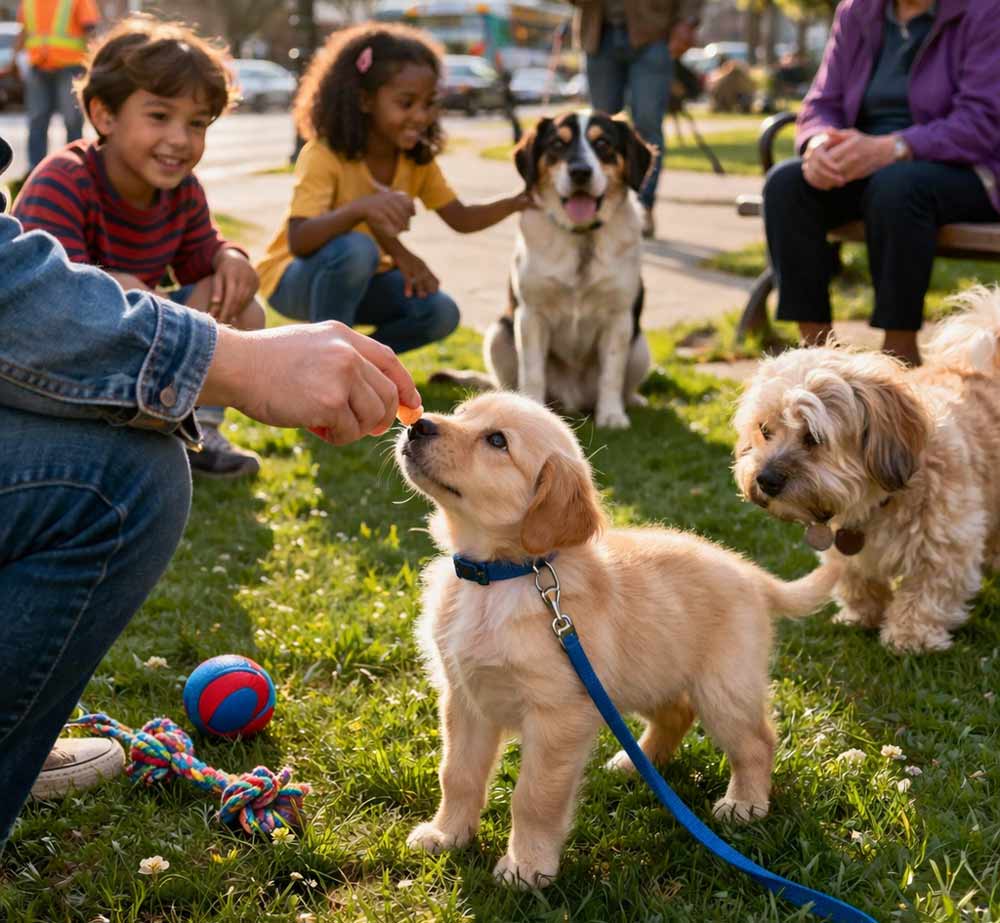
Puppy socialization is the process of exposing your young dog to a wide variety of people, animals, environments, sounds, and experiences during their critical developmental period, typically between 3 and 14 weeks of age. This early exposure helps puppies develop into confident, well-adjusted adult dogs who can handle new situations calmly and appropriately.
The importance of puppy socialization cannot be overstated. During this brief window, puppies are naturally more curious and less fearful, making it the ideal time to introduce them to the world around them. Properly socialized puppies are less likely to develop behavioral problems such as aggression, excessive fearfulness, or anxiety as they mature.
What Dog Owners Should Know
Understanding the basics of puppy socialization sets the foundation for success. The critical socialization period occurs when puppies are most receptive to new experiences, but it’s also when they’re most vulnerable to disease since their immune systems aren’t fully developed.
Socialization isn’t just about meeting other dogs. It includes exposure to different types of people (children, elderly individuals, people wearing hats or uniforms), various environments (busy streets, quiet parks, different floor surfaces), sounds (vacuum cleaners, car horns, thunder), and handling experiences (nail trimming, ear cleaning, veterinary examinations).
Quality matters more than quantity when socializing puppies. A few positive, controlled experiences are far more valuable than overwhelming your puppy with too many new situations at once. Always watch your puppy’s body language and comfort level, allowing them to approach new experiences at their own pace.
Before beginning socialization activities, ensure your puppy has received at least their first round of vaccinations and has clearance from your veterinarian. While the socialization window is brief, safety should always come first.
Daily Care Tips
Start socialization activities at home by introducing your puppy to household sounds, different textures, and gentle handling exercises. Play recordings of various sounds at low volumes, gradually increasing the volume as your puppy becomes comfortable.
Handle your puppy’s paws, ears, and mouth daily to prepare them for grooming and veterinary care. Make these sessions positive by offering treats and praise throughout the process.
Invite friends and family members of different ages to visit and interact with your puppy. Ask visitors to let your puppy approach them rather than forcing interactions. Provide treats for guests to offer, creating positive associations with new people.
Take your puppy on short car rides to different locations, even if you’re just sitting in the parking lot observing the environment. This helps them become comfortable with travel and exposes them to new sights and sounds.
Puppy classes provide structured socialization opportunities with other dogs of similar age and vaccination status. These classes also teach basic obedience skills while allowing supervised play time.
Create positive associations with common experiences your dog will encounter throughout life. Practice putting on and taking off a collar and leash, opening and closing doors, and walking on different surfaces like grass, concrete, and gravel.
Remember that socialization should continue beyond the critical period. Regular, positive exposure to new experiences throughout your dog’s life helps maintain their social skills and confidence.
Common Issues to Watch For
Over-stimulation is a common problem during puppy socialization. Signs include excessive panting, trying to hide, loss of bladder control, or becoming overly excited and unable to calm down. If you notice these signs, remove your puppy from the situation and allow them to rest.
Some puppies may show fear or anxiety toward specific stimuli despite gradual introduction. This might manifest as cowering, trembling, excessive vocalization, or attempts to flee. Don’t force interactions, as this can worsen fear responses.
Aggressive behavior, even in puppies, shouldn’t be ignored. While some play behavior might look rough, true aggression includes stiff body posture, prolonged staring, and biting without play signals. If you’re concerned about your puppy’s behavior, consult a professional dog trainer or veterinary behaviorist.
Puppies who become overly dependent on their owners during socialization may develop separation anxiety later. Encourage independence by allowing your puppy to explore and interact with others, even when you’re not directly involved.
Watch for signs of illness during socialization activities, as puppies are more susceptible to diseases when their immune systems are still developing. Lethargy, loss of appetite, vomiting, or diarrhea warrant immediate attention.
Some owners make the mistake of only socializing their puppy with similar dogs or people. This can lead to selective socialization, where the dog only feels comfortable with specific types of individuals or situations.
When to Call Your Vet
Contact your veterinarian immediately if your puppy shows signs of illness after socialization activities, including vomiting, diarrhea, lethargy, loss of appetite, or difficulty breathing. These symptoms could indicate exposure to infectious diseases.
Seek professional help if your puppy displays extreme fear responses that don’t improve with gentle, gradual exposure. Persistent cowering, trembling, or complete withdrawal from normal activities may require intervention from a veterinary behaviorist.
Aggressive behavior toward people or other animals, even in young puppies, warrants professional evaluation. While some puppy play can appear rough, concerning behaviors include unprovoked snapping, prolonged aggressive postures, or inability to be redirected from aggressive behavior.
If your puppy suffers an injury during socialization activities, contact your veterinarian for guidance, even if the injury seems minor. Puppies heal differently than adult dogs, and what appears insignificant might require medical attention.
Consult your veterinarian if your puppy develops obsessive or repetitive behaviors during socialization, such as excessive spinning, tail chasing, or compulsive licking. These behaviors can indicate stress or underlying health issues.
Schedule a consultation if you’re unsure about your puppy’s vaccination status or appropriate socialization activities. Your veterinarian can provide personalized guidance based on your puppy’s health, age, and local disease risks. Just as choosing the right dog breed for your family requires careful consideration, proper socialization planning should be tailored to your specific situation.
Related reading: How to Create a Safe Puppy Environment at Home
Related reading: Essential Grooming Techniques for Long-Haired Breeds
Behavioral patterns often overlap — Understanding Canine Body Language: A Comprehensive Guide digs into a related issue that many owners encounter alongside this one.
Behavioral patterns often overlap — Essential Tips for Managing Dog Behavior During the Holidays digs into a related issue that many owners encounter alongside this one.
FAQ
What is puppy socialization?
Puppy socialization is the process of exposing young dogs to a variety of people, animals, environments, sounds, and experiences during their critical developmental period, typically between 3 and 14 weeks of age. This helps them develop into confident, well-adjusted adults.
Why is socialization important for puppies?
Socialization helps prevent behavioral problems such as fear, aggression, and anxiety in adult dogs. Properly socialized puppies are more likely to be calm and confident when encountering new situations throughout their lives, making them better companions and easier to manage.
How can I socialize my puppy?
Start with gentle exposure to household sounds, different textures, and handling exercises. Gradually introduce your puppy to new people, animals, environments, and experiences. Puppy classes, controlled playdates, and short outings to dog-friendly locations can provide valuable socialization opportunities. However, be aware of potential risks by learning about the dangers of dog parks before visiting these locations.
What age should I start socializing my puppy?
The critical socialization period occurs between 3 and 14 weeks of age, though socialization should begin as early as safely possible with your veterinarian’s guidance. Even after this period, continued positive exposure to new experiences throughout your dog’s life helps maintain social skills.
What are the signs of a well-socialized puppy?
Well-socialized puppies typically approach new situations with curiosity rather than fear, recover quickly from startling experiences, interact appropriately with people and other dogs, and remain calm during handling and grooming. They’re also more adaptable to changes in routine and environment. Proper socialization can help prevent issues like separation anxiety that might develop later in life.
Disclaimer: This article is for educational purposes only and is not a substitute for professional veterinary advice. Always consult with your veterinarian regarding your puppy’s health, behavior, and appropriate socialization activities based on their individual needs and vaccination status.