
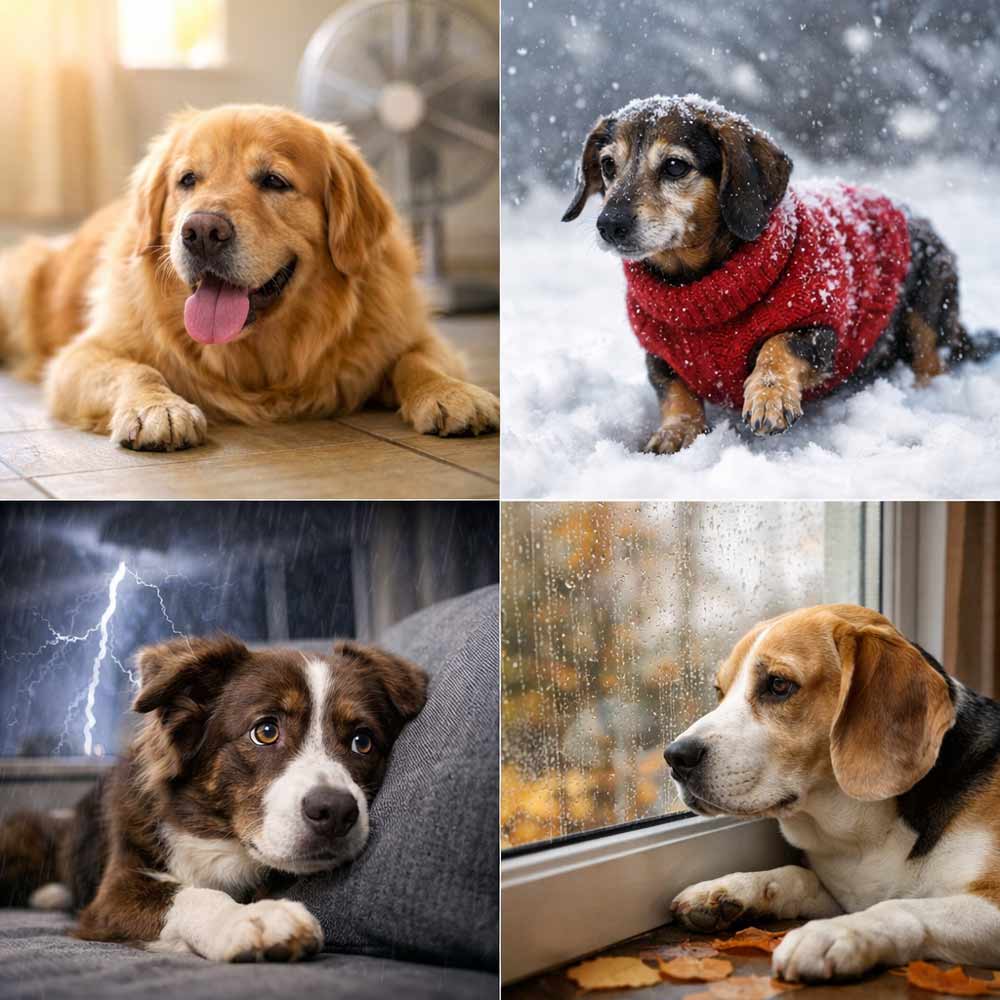
Weather conditions can dramatically affect your dog’s behavior, mood, and overall well-being. Just like humans, dogs respond to changes in temperature, humidity, barometric pressure, and seasonal light patterns. These environmental factors can trigger everything from mild restlessness to significant behavioral changes that may require your attention.
The effects of weather on dog behavior range from temporary discomfort to more serious concerns that impact your pet’s daily routine. Hot weather might make your normally active dog lethargic, while cold snaps can cause stiffness in older pets. Storms often bring anxiety, and seasonal changes can affect sleep patterns and appetite. Understanding these connections helps you provide better care and know when professional help might be needed.
What Dog Owners Should Know
Different weather conditions affect dogs in distinct ways, and recognizing these patterns can help you anticipate and manage your pet’s needs more effectively.
Hot Weather Effects: High temperatures and humidity can cause significant behavioral changes in dogs. You might notice increased panting, seeking cool surfaces, reduced appetite, and decreased activity levels. Some dogs become irritable or restless when overheated, while others may appear unusually lethargic. Dogs with thick coats, flat faces, or those who are overweight face higher risks in hot weather.
Cold Weather Impact: Chilly temperatures can make dogs more sluggish, especially older pets who may experience joint stiffness. Some dogs become more clingy during cold weather, seeking warmth from their owners. Small breeds and dogs with thin coats often show increased shivering and may be reluctant to go outside. Cold weather can also affect dogs with existing health conditions, particularly those with arthritis symptoms that become more pronounced in cooler temperatures.
Storm and Barometric Pressure Sensitivity: Many dogs can sense approaching storms before humans notice any signs. Changes in barometric pressure may trigger anxiety, restlessness, pacing, or hiding behaviors. Some dogs become destructive during storms, while others may lose bladder control or exhibit excessive drooling. Thunder and lightning can intensify these reactions, with some pets developing lasting phobias.
Seasonal Affective Changes: Just as humans experience seasonal mood changes, dogs can be affected by variations in daylight hours. Shorter winter days might lead to increased sleeping, reduced playfulness, or changes in appetite. Some dogs show signs of depression during darker months, while others become more energetic as spring daylight hours increase.
Rain and Wet Conditions: Extended periods of rain can affect dogs who need regular outdoor exercise. Confined indoor time may lead to restlessness, destructive behavior, or regression in house training. Some dogs develop anxiety around wet conditions, making necessary outdoor trips challenging.
Related reading: How to Manage Dog Separation Anxiety
What You Can Do at Home
Several practical strategies can help minimize weather-related behavioral issues and keep your dog comfortable throughout different conditions.
Hot Weather Management: Provide plenty of fresh water and ensure your dog has access to shaded, cool areas. Limit outdoor exercise to early morning or evening hours when temperatures are lower. Consider cooling mats, elevated beds, or fans to help your dog regulate body temperature. Never leave your pet in a parked vehicle, even for short periods. Watch for signs of dehydration and heat-related distress.
Cold Weather Preparation: Provide warm bedding away from drafts and consider dog sweaters or coats for breeds that feel the cold. Limit time outdoors during extreme cold, and check paws for ice or salt irritation after walks. Maintain regular feeding schedules, as some dogs need extra calories to maintain body heat in cold weather.
Storm Anxiety Solutions: Create a safe space where your dog can retreat during storms. This might be a quiet room, crate with comfortable bedding, or even a bathroom. Some dogs respond well to calming aids like thunder shirts, which provide gentle pressure. Background noise from fans, calming music, or white noise machines can help mask storm sounds.
Indoor Exercise Options: During extended bad weather, provide mental and physical stimulation indoors. Hide treats around the house, use puzzle toys, practice training commands, or set up indoor obstacle courses. Stair climbing (if safe for your dog) can provide good exercise in small spaces.
Routine Maintenance: Stick to regular feeding and sleep schedules as much as possible, regardless of weather. Consistency helps dogs feel secure during environmental changes. Gradually expose anxious dogs to weather-related stimuli through controlled experiences when possible.
Environmental Safety: Remove or secure outdoor items that might become hazardous in storms. Be aware of seasonal dangers like blue-green algae in water sources during warm weather, or antifreeze spills during winter months.
When to Call Your Vet
While many weather-related behavioral changes are normal, certain signs indicate the need for professional veterinary evaluation.
Heat-Related Emergencies: Contact your vet immediately if your dog shows signs of heatstroke, including excessive panting, drooling, vomiting, diarrhea, or loss of coordination. Difficulty breathing, bright red gums, or collapse require emergency care. These situations may need immediate first aid measures while transporting to the veterinary clinic.
Severe Weather Anxiety: If storm anxiety significantly impacts your dog’s quality of life, causes property damage, or leads to self-injury, professional help is warranted. Veterinarians can prescribe anti-anxiety medications or recommend certified animal behaviorists for severe phobias.
Cold Weather Concerns: Seek veterinary care if your dog shows signs of hypothermia, including lethargy, muscle stiffness, difficulty breathing, or pale gums. Frostbite on ears, tail, or paw pads also requires professional treatment.
Persistent Behavioral Changes: Contact your vet if weather-related behavior changes persist beyond the triggering conditions, worsen over time, or seem disproportionate to the environmental factors. Sudden personality changes, loss of appetite lasting more than 24-48 hours, or elimination problems may indicate underlying health issues.
Physical Symptoms: Weather sensitivity combined with physical symptoms like limping, difficulty rising, excessive scratching, or changes in breathing patterns warrant veterinary evaluation to rule out medical conditions.
Behavioral patterns often overlap — Understanding Dog Body Language: A Guide for Owners digs into a related issue that many owners encounter alongside this one.
Behavioral patterns often overlap — dog behavior management digs into a related issue that many owners encounter alongside this one.
FAQ
How does hot weather affect my dog’s behavior?
Hot weather typically causes dogs to become less active, seek cool surfaces, and pant more frequently. Many dogs show reduced appetite and may seem lethargic or irritable. Some become restless as they struggle to find comfortable positions, while others might refuse walks or outdoor activities they normally enjoy.
What should I do if my dog is anxious during storms?
Create a calm environment by providing a safe retreat space, using background noise to mask storm sounds, and maintaining your own calm demeanor. Avoid consoling anxious behavior, as this can reinforce fears. Instead, redirect attention with activities or treats when possible. For severe cases, consult your veterinarian about anti-anxiety options.
Can cold weather cause health issues for my dog?
Yes, cold weather can exacerbate existing conditions like arthritis and may cause new problems such as frostbite or hypothermia in vulnerable dogs. Older pets, small breeds, and dogs with thin coats are particularly susceptible. Cold weather can also dry out skin and paw pads, leading to cracking and discomfort.
How can I tell if my dog is too hot or too cold?
Signs of overheating include excessive panting, drooling, seeking cool surfaces, and reduced activity. Signs of being too cold include shivering, seeking warm spots, reluctance to go outside, and lifting paws off cold surfaces. Both extremes may cause changes in appetite and behavior. Trust your observations and adjust your dog’s environment accordingly.
This article provides educational information about weather effects on dog behavior and is not intended to replace professional veterinary advice. Always consult with your veterinarian for concerns about your pet’s health or significant behavioral changes.
Disclaimer: This article is educational and not a substitute for professional veterinary advice.