
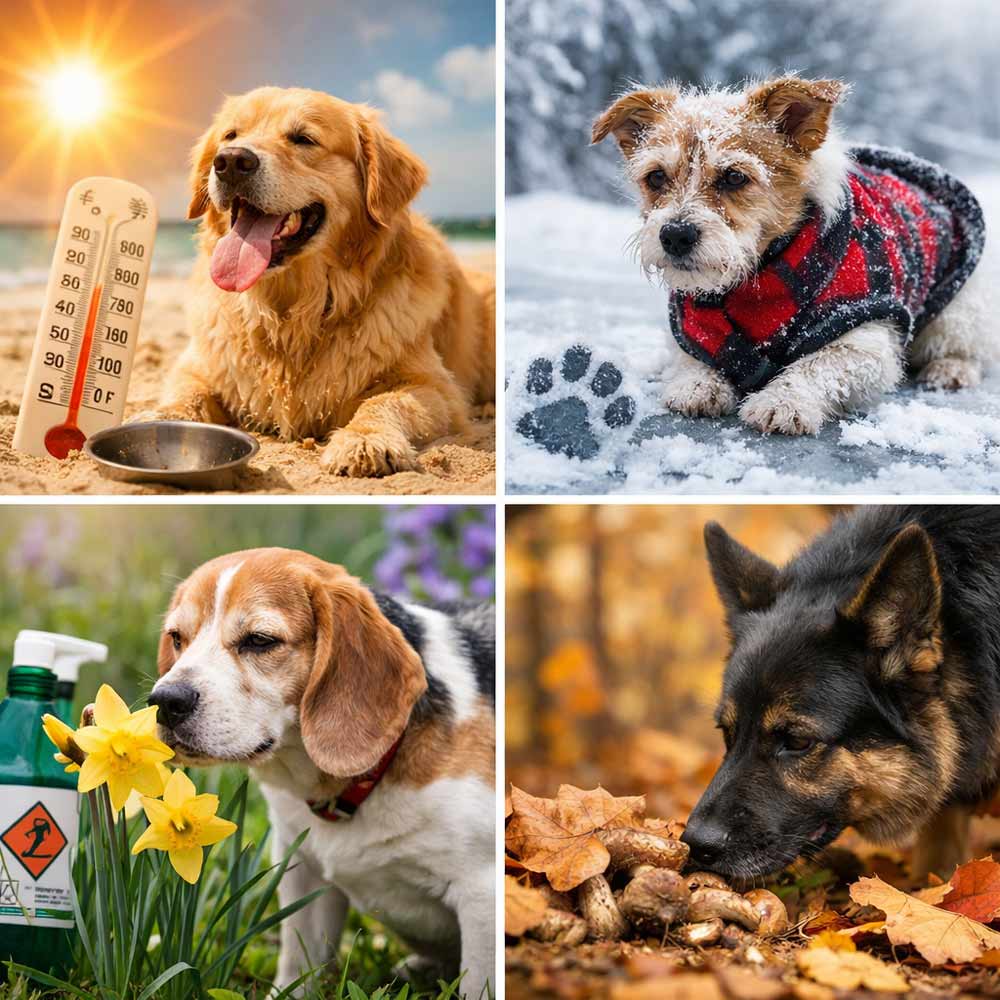
Every season brings its own unique hazards that can put your dog at risk. From scorching summer heat that can lead to heatstroke to winter conditions that cause frostbite, seasonal changes create different environmental challenges for our four-legged companions. Understanding these seasonal risks for dogs helps you stay one step ahead and keep your pet safe throughout the year.
The good news is that most seasonal hazards are preventable when you know what to look for and how to respond. By recognizing warning signs early and taking appropriate action, you can protect your dog from serious health complications that vary with the weather and seasons.
Why This Risk Matters
Seasonal risks for dogs aren’t just minor inconveniences—they can quickly become life-threatening emergencies. Dogs don’t regulate their body temperature the same way humans do, making them particularly vulnerable to extreme weather conditions. Their natural curiosity also puts them at risk when new seasonal hazards appear in their environment.
Summer heat can cause dehydration and heatstroke within minutes, especially in breeds with flat faces or thick coats. Winter cold poses risks of frostbite and hypothermia, particularly for small dogs, elderly pets, or those with thin coats. Spring and fall bring their own challenges with increased exposure to toxic plants, seasonal allergies, and pesticides used for lawn and garden care.
Related reading: Seasonal Allergies in Dogs: Symptoms and Treatments
These risks compound because dogs often can’t communicate their discomfort until symptoms become severe. A dog suffering from early heatstroke might seem only mildly uncomfortable, but their condition can deteriorate rapidly without intervention. Similarly, exposure to toxic substances might not show immediate symptoms, making early detection crucial for successful treatment.
Warning Signs to Watch For
Recognizing the early warning signs of seasonal risks can make the difference between a minor scare and a veterinary emergency. Different seasons present different symptoms to monitor.
During hot weather, watch for signs of heat-related stress. Heavy panting, excessive drooling, and difficulty breathing are early indicators your dog may be overheating. More serious symptoms include vomiting, diarrhea, lethargy, or stumbling. Dogs experiencing heatstroke may have bright red gums, elevated body temperature, or appear confused and disoriented.
Cold weather brings different warning signs. Shivering, whimpering, or seeking warm places are early indicators your dog is too cold. Frostbite typically affects ears, tail, and paw pads first, appearing as pale or grayish skin that may feel cold and brittle. As frostbite progresses, affected areas may become red, swollen, or painful to touch.
Throughout the year, be alert for signs of toxic plant or substance ingestion. Symptoms can include vomiting, diarrhea, excessive drooling, difficulty swallowing, or changes in behavior. Some dogs may show loss of appetite, lethargy, or unusual restlessness. Seasonal allergies often present as excessive scratching, red or watery eyes, sneezing, or skin irritation.
Dehydration can occur in any season but becomes more common during hot weather or when dogs are more active outdoors. Signs Your Dog Is Dehydrated: What to Look For can help you identify when your pet needs immediate hydration.
What You Can Do Right Away
When you notice early warning signs of seasonal risks, taking immediate action can prevent minor issues from becoming serious emergencies. Your response should match the specific risk your dog is facing.
For heat-related issues, move your dog to a cool, shaded area immediately. Provide fresh water, but don’t force them to drink large amounts at once. Apply cool (not ice-cold) water to their paw pads, belly, and ears. You can use wet towels, but replace them frequently as they warm up. Preventing Heatstroke in Dogs: Essential Tips for Hot Weather offers detailed guidance on managing heat exposure.
Never leave your dog unattended in a vehicle, even for short periods. The Risks of Leaving Dogs in Hot Cars: What You Should Know explains why car interiors become dangerously hot even on mild days.
Related reading: The Dangers of Dog Parks: What Every Owner Should Know
For cold weather concerns, bring your dog inside and provide warm, dry bedding. Gradually warm them using blankets or your body heat—avoid direct heat sources like heating pads or hair dryers, which can cause burns on cold-damaged skin. Check paw pads for ice, salt, or chemical deicers that need gentle cleaning with warm water.
If you suspect toxic plant or substance ingestion, remove any remaining material from your dog’s mouth if it’s safe to do so. Don’t induce vomiting unless specifically instructed by a veterinary professional, as some substances can cause more damage coming back up. Keep the packaging or take photos of the suspected toxin to show your veterinarian.
For seasonal allergies, limit exposure to known triggers when possible. Keep your dog indoors during high pollen days, wipe their paws and coat after outdoor activities, and ensure they have access to fresh water. Regular bathing with mild, hypoallergenic shampoo can help remove allergens from their coat.
When to Call Your Vet
Some situations require immediate professional veterinary attention, regardless of your initial response efforts. Don’t wait to see if symptoms improve on their own when dealing with potentially serious seasonal risks.
Contact your veterinarian immediately if your dog shows signs of severe heatstroke, including persistent vomiting, difficulty breathing, or loss of consciousness. Similarly, any suspected case of frostbite needs professional evaluation, especially if you notice skin color changes or your dog appears to be in significant pain.
Toxic ingestion always warrants professional guidance. Even if your dog seems fine initially, many toxins have delayed effects that can become life-threatening without proper treatment. Call your veterinarian or pet poison control hotline immediately if you suspect your dog has consumed any potentially harmful substance.
Seek immediate veterinary care if your dog shows signs of severe dehydration, such as sunken eyes, dry gums, or skin that doesn’t spring back when gently pinched. Persistent vomiting or diarrhea, regardless of the suspected cause, also requires professional attention to prevent dangerous fluid loss.
Don’t hesitate to contact your veterinarian if you’re unsure about your dog’s symptoms or if their condition seems to be worsening despite your efforts. Emergency veterinary care is available 24/7 for situations that can’t wait until regular office hours.
Related reading: How to Prevent Dog Heatstroke: Essential Tips
If this concern is on your radar, preventing heatstroke addresses another outdoor or seasonal risk that frequently overlaps with it.
Related reading: Creative Indoor Activities for Dogs: Keeping Your Pup Engaged
FAQ
What are the signs of heatstroke in dogs?
Early signs include heavy panting, excessive drooling, and restlessness. As heatstroke progresses, dogs may vomit, have diarrhea, appear confused, or collapse. Bright red gums and elevated body temperature are serious warning signs that require immediate veterinary attention.
How can I protect my dog from cold weather?
Limit time outdoors during extreme cold, especially for small, elderly, or thin-coated dogs. Provide proper shelter, consider dog sweaters or coats for vulnerable pets, and always wipe paws after walks to remove ice, salt, and chemical deicers. Never leave dogs outside in freezing temperatures.
What should I do if my dog eats something toxic?
Remove any remaining material from their mouth if safe to do so, but don’t induce vomiting unless instructed by a veterinary professional. Contact your veterinarian or pet poison control immediately. Keep packaging or take photos of the suspected toxin to help with treatment decisions.
Are there specific foods that are dangerous for dogs in summer?
Many foods are toxic to dogs year-round, but summer barbecues and picnics increase exposure risks. Is It Safe for Dogs to Eat Grapes? Understanding the Risks explains one common summer hazard. Always keep human food away from dogs and educate guests about not sharing food with your pet.
How can I tell if my dog is dehydrated?
Check their gums—they should be moist and pink, not dry or sticky. Gently pinch the skin on their neck; it should spring back immediately. Sunken eyes, loss of appetite, and lethargy are also signs of dehydration. Severe dehydration requires immediate veterinary care.
Can dogs have seasonal allergies like humans?
Yes, dogs can develop seasonal allergies to pollen, mold, and other environmental allergens. Symptoms include excessive scratching, red or watery eyes, sneezing, and skin irritation. Unlike humans, dogs often show allergy symptoms through their skin rather than respiratory symptoms.
What summer fruits are safe for dogs?
Some fruits can be healthy treats for dogs when given in moderation. Can Dogs Eat Strawberries? Benefits, Risks, and Safe Amounts provides guidance on one popular summer fruit. Always research any human food before sharing it with your dog.
How quickly can heatstroke develop in dogs?
Heatstroke can develop rapidly, sometimes within minutes of exposure to high temperatures or intense exercise. Dogs left in hot cars, exercised during peak heat, or exposed to high humidity are at highest risk. The condition can quickly become life-threatening without immediate intervention.
This article is for educational purposes only and is not intended to replace professional veterinary advice. Always consult with your veterinarian for specific health concerns about your dog, especially when dealing with potential emergencies or toxic exposures.
Disclaimer: This article is educational and not a substitute for professional veterinary advice.