
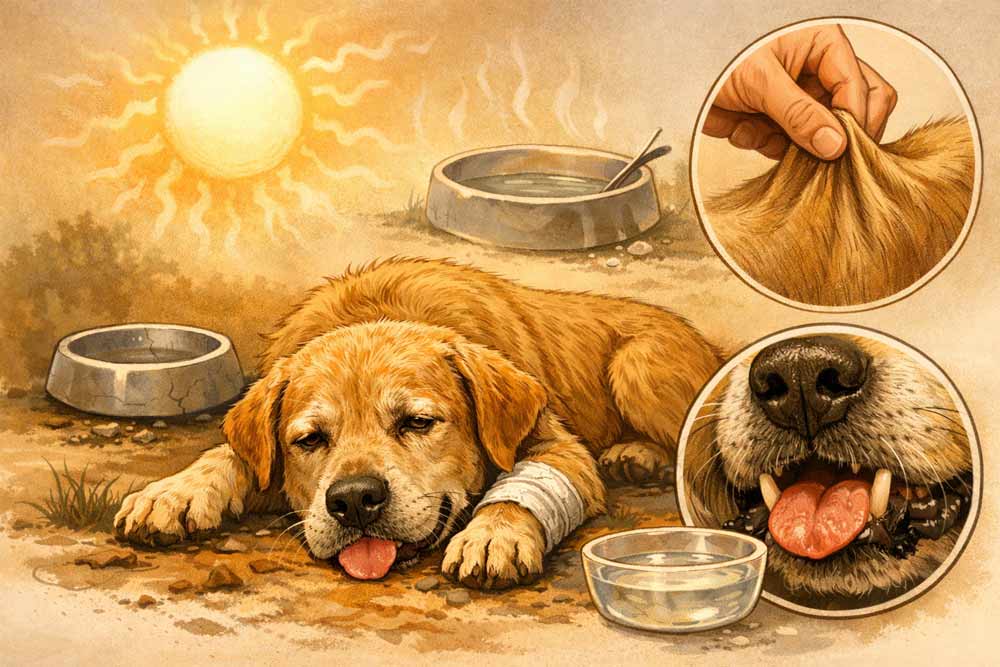
Dog dehydration signs can be subtle at first, but recognizing them early is essential for your pet’s health and wellbeing. Dehydration occurs when your dog loses more fluids than they take in, and it can happen more quickly than many pet owners realize. Common signs include lethargy, dry gums, loss of skin elasticity, and reduced urination.
While mild dehydration can often be addressed at home with increased water intake, severe dehydration is a serious medical condition that requires immediate veterinary attention. Understanding what to look for helps you respond appropriately and keep your furry friend healthy and comfortable.
Common Signs to Watch For
The most noticeable dog dehydration signs often develop gradually, making them easy to miss in the early stages. Your dog’s energy level may be the first thing you notice changing. Dogs experiencing dehydration typically become less active and may seem unusually tired or reluctant to play.
Physical signs become more apparent as dehydration progresses. Dry or sticky gums are among the most reliable indicators – healthy dogs should have moist, pink gums. You might also notice that your dog’s nose feels drier than usual, though this alone isn’t a definitive sign since nose moisture can vary for many reasons.
Changes in your dog’s eyes can also signal hydration issues. The eyes may appear sunken or dull, and the area around them might look less plump than normal. Some dogs also develop a hunched posture or seem uncomfortable when moving around.
Behavioral changes often accompany physical symptoms. Your dog might show less interest in food, seem confused, or appear more anxious than usual. These behavioral shifts can sometimes be mistaken for other issues, which is why it’s important to consider them alongside physical signs.
Reduced urination frequency or very concentrated, dark yellow urine can indicate that your dog’s body is trying to conserve water. However, keep in mind that urination patterns can vary based on diet, activity level, and other factors.
What Can Cause This in Dogs?
Several factors can lead to dehydration in dogs, ranging from simple oversight to more complex health issues. Hot weather is one of the most common culprits, especially when dogs spend extended time outdoors or engage in vigorous exercise without adequate water breaks.
Illness frequently contributes to dehydration. Vomiting and diarrhea cause rapid fluid loss, while fever increases the body’s water needs. Dogs who feel unwell may also drink less water than usual, compounding the problem. Certain medications can affect fluid balance, and some medical conditions make dogs more prone to dehydration.
Travel and changes in routine sometimes disrupt normal drinking habits. Some dogs become stressed in new environments and forget to drink, while others may be reluctant to drink unfamiliar water. This can be particularly relevant if you’re dealing with Understanding Dog Anxiety: Common Triggers and Solutions, as anxious dogs may have altered eating and drinking patterns.
Age plays a role as well. Senior dogs may not regulate their body temperature as effectively and might not recognize thirst cues as readily as younger dogs. Puppies can become dehydrated more quickly due to their smaller body size and higher activity levels.
Sometimes dehydration results from inadequate water availability. This might happen if water bowls are empty, dirty, or positioned in locations your dog finds uncomfortable or inaccessible.
Enrichment works best as a system — keeping dog active in winter covers a related approach that pairs well with what’s described here.
What You Can Check at Home
There are several simple tests you can perform at home to assess your dog’s hydration status. The skin tent test is one of the most reliable methods. Gently pinch the skin on the back of your dog’s neck or between their shoulder blades, then release it. In a well-hydrated dog, the skin should snap back immediately. If it takes a second or two to return to normal position, this may indicate dehydration.
Checking your dog’s gums provides another useful assessment. Press gently on the gum with your finger – it should turn white momentarily, then return to pink within one to two seconds. Delayed color return, along with dry or tacky-feeling gums, can suggest dehydration.
Monitor your dog’s water intake and urination patterns. Most dogs should drink roughly one ounce of water per pound of body weight daily, though this varies with activity level, diet, and weather. Keep track of how often your dog drinks and whether they’re producing normal amounts of urine.
Observe your dog’s overall demeanor and energy level. While many factors can affect mood and activity, significant changes combined with other signs may indicate hydration issues. Pay attention to appetite changes as well, since dogs who don’t feel well often eat and drink less.
Temperature can provide additional information. While you shouldn’t rely on nose moisture alone, a persistently dry nose combined with other symptoms may be worth noting. However, focus more on overall behavior and the other physical signs mentioned above.
When to Call Your Vet
Certain situations require immediate veterinary attention. Contact your vet right away if your dog shows signs of severe dehydration, including skin that stays tented for several seconds, very dry or white gums, or extreme lethargy where your dog seems barely responsive.
Vomiting or diarrhea lasting more than 24 hours warrants veterinary care, especially if your dog isn’t keeping water down. These conditions can lead to rapid dehydration and may indicate underlying health issues that need professional treatment.
If your dog refuses to drink water for an extended period or if you notice a significant decrease in urination, don’t wait to see if the situation improves. Dogs can become seriously dehydrated within hours under certain conditions.
Puppies, senior dogs, and dogs with chronic health conditions need veterinary evaluation sooner rather than later when dehydration is suspected. These dogs have less reserve and can deteriorate more quickly than healthy adult dogs.
Emergency situations require immediate action. If your dog collapses, has difficulty breathing, or shows signs of heat stroke along with dehydration symptoms, seek emergency veterinary care immediately. In such cases, knowing basic Emergency First Aid for Dog Injuries techniques can be invaluable while you transport your pet to professional care.
When in doubt, it’s always better to contact your veterinarian. They can provide guidance over the phone and help you determine whether your dog needs to be seen immediately or if home care might be appropriate.
Related reading: How to Create a Safe Puppy Environment at Home
FAQ
How can I tell if my dog is dehydrated?
The most reliable signs include the skin tent test (pinching skin that doesn’t snap back quickly), dry or sticky gums, lethargy, and reduced urination. Check your dog’s gums for moisture and perform the skin elasticity test on the back of their neck. These physical signs, combined with behavioral changes like decreased appetite or energy, can indicate dehydration.
Related reading: Choosing the Right Dog Breed for Your Family
Related reading: Senior Dog Mobility: Tips for Helping Your Aging Pet
Related reading: How to Create a Balanced Routine for Your Senior Dog
Related reading: Understanding the Effects of Weather on Dog Behavior
What should I do if I suspect my dog is dehydrated?
For mild dehydration, encourage your dog to drink small amounts of water frequently. Offer fresh, cool water and consider adding a small amount of low-sodium broth for flavor. Move your dog to a cool, shaded area and contact your veterinarian for guidance. Never force water into your dog’s mouth, as this can cause choking or aspiration.
Environmental hazards often travel together — keeping dog cool covers a closely related risk that’s worth understanding at the same time.
Can dehydration be dangerous for dogs?
Yes, dehydration can be very dangerous and potentially life-threatening if left untreated. Severe dehydration can lead to organ failure, shock, and other serious complications. Puppies, senior dogs, and dogs with health conditions are at higher risk for rapid deterioration. This is why recognizing early signs and seeking appropriate care is so important.
Related reading: The Risks of Leaving Dogs in Hot Cars: What You Should Know
What are the best ways to keep my dog hydrated?
Provide fresh, clean water daily and ensure multiple water sources are available, especially in hot weather. During exercise or outdoor activities, offer water breaks every 15-20 minutes. Consider wet food, which has higher moisture content than dry kibble. Monitor your dog’s diet, as some foods like raw meat diets may affect hydration needs differently than processed foods.
Disclaimer: This article is for educational purposes only and is not intended to replace professional veterinary advice, diagnosis, or treatment. Always consult with a qualified veterinarian regarding your dog’s health concerns. If you suspect your dog is experiencing dehydration or any health emergency, contact your veterinarian or emergency animal hospital immediately.
If this concern is on your radar, Creating a Safe Outdoor Space for Your Dog addresses another outdoor or seasonal risk that frequently overlaps with it.
Environmental hazards often travel together — How to Keep Your Dog Safe During Fireworks covers a closely related risk that’s worth understanding at the same time.
Related reading: Fun and Engaging Games to Play with Your Dog
Related reading: How to Prevent Dog Heatstroke: Essential Tips
Disclaimer: This article is educational and not a substitute for professional veterinary advice.