
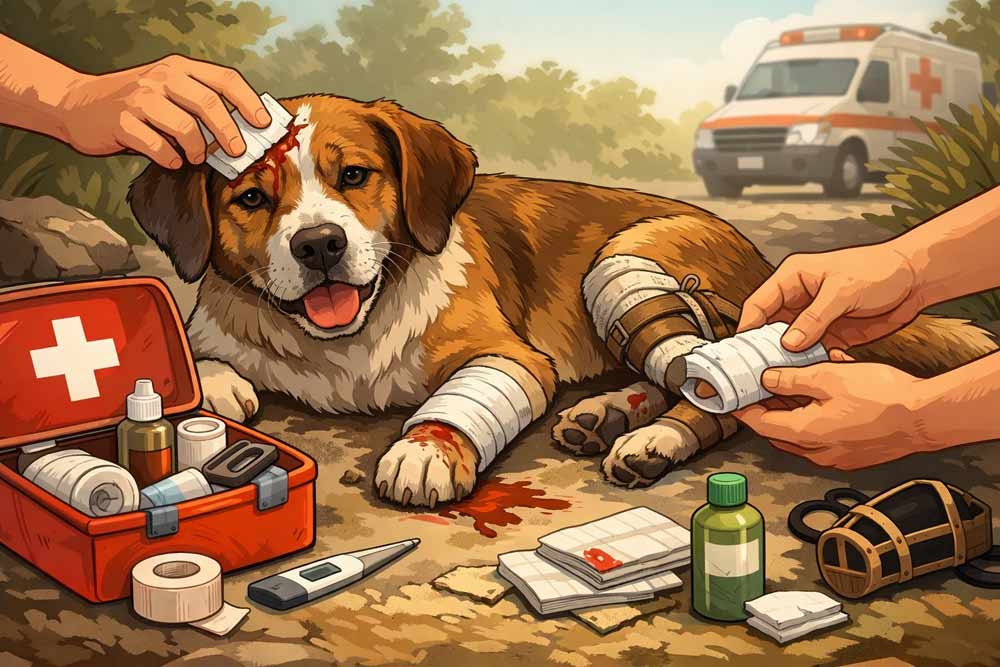
When your dog gets injured, knowing basic first aid techniques can make the difference between a minor incident and a serious emergency. Dog injury first aid involves providing immediate care to stabilize your pet while preparing to seek professional veterinary treatment when necessary.
Every dog owner should understand fundamental emergency care principles, including how to assess injuries, provide basic wound care, and recognize when immediate veterinary intervention is required. While first aid can help manage initial care, it’s important to remember that these techniques are temporary measures designed to keep your dog safe until professional help is available.
What Dog Owners Should Know
Understanding common dog injuries helps you respond appropriately during emergencies. Dogs can experience various types of injuries, from minor cuts and scrapes to more serious trauma involving broken bones, deep wounds, or internal injuries.
Most dog injuries fall into several categories: cuts and lacerations, burns, fractures, sprains, eye injuries, and bite wounds. Each type requires different approaches, but all benefit from calm, methodical care. The key to effective dog emergency care lies in staying composed and following a systematic approach.
Before attempting any first aid, ensure your safety first. An injured dog may bite out of fear or pain, even if they’re normally gentle. Approach slowly, speak in soothing tones, and consider using a muzzle if necessary – though never muzzle a dog that’s vomiting or having difficulty breathing.
If you’re monitoring your dog’s condition, dog health offers practical guidance on a closely connected health topic.
Keep a basic pet first aid kit accessible in your home and car. Essential items include gauze pads, medical tape, antiseptic solution, scissors, tweezers, a digital thermometer, and your veterinarian’s contact information. Having these supplies readily available can save precious time during emergencies.
Environmental factors can contribute to stress-related behaviors that may lead to injuries. Just as Understanding Dog Anxiety: Common Triggers and Solutions helps prevent behavioral issues, being aware of injury risks in your dog’s environment can help you create safer spaces for your pet.
Related reading: Senior Dog Mobility: Tips for Helping Your Aging Pet
What You Can Do at Home
When your dog sustains an injury, start by assessing the situation calmly. Check for visible wounds, signs of pain, or unusual behavior. Look for bleeding, swelling, difficulty moving, or changes in breathing patterns.
For bleeding wounds, apply gentle pressure using clean gauze or cloth. Don’t remove objects embedded in wounds – stabilize them and seek immediate veterinary care. If bleeding is severe and won’t stop with direct pressure, you may need to apply pressure to pressure points or use a tourniquet, but these techniques require proper knowledge and should only be temporary measures.
Clean minor cuts with warm water or saline solution. Avoid hydrogen peroxide or alcohol, as these can damage tissue and delay healing. Pat the area dry and apply a thin layer of antibiotic ointment if recommended by your veterinarian.
For suspected fractures, immobilize the affected area using a makeshift splint. Use magazines, cardboard, or towels to support the limb, but don’t attempt to reset bones. Keep your dog as still as possible and transport them carefully to prevent further injury.
Burns require immediate cooling with cool (not ice-cold) water for several minutes. Cover the area with a damp, clean cloth. Never apply ice directly to burns, as this can cause additional tissue damage.
If your dog is unconscious but breathing, position them on their side with their head extended to keep airways clear. Check their pulse by feeling for the heartbeat on the inner thigh near the groin area.
Monitor your dog’s vital signs when possible. Normal dog temperature ranges from 101-102.5°F (38.3-39.2°C). Heart rate varies by size: small dogs typically have 100-140 beats per minute, while large dogs range from 60-100 beats per minute.
When to Call Your Vet
Certain situations require immediate veterinary attention, regardless of your first aid efforts. Call your veterinarian or emergency animal hospital immediately if your dog experiences severe bleeding that won’t stop, difficulty breathing, loss of consciousness, seizures, or suspected poisoning.
Signs that indicate serious internal injuries include pale gums, rapid heartbeat, weakness, collapse, or a distended abdomen. These symptoms may indicate internal bleeding or shock, both life-threatening conditions requiring immediate professional intervention.
Eye injuries always warrant veterinary attention, as they can quickly become serious and potentially affect vision permanently. Similarly, any injury involving the head, neck, or spine requires professional evaluation due to the risk of neurological damage.
Deep wounds, especially those that gape open or show underlying tissue, need professional cleaning and likely sutures. Bite wounds, particularly from other animals, carry high infection risks and may require antibiotics.
If your dog shows signs of shock – including rapid breathing, weak pulse, cold extremities, or altered mental state – seek immediate veterinary care. Shock can develop from various injuries and can be life-threatening if not treated promptly.
When in doubt, contact your veterinarian. They can provide guidance over the phone and help you determine whether immediate care is necessary or if home monitoring is appropriate. Many veterinary clinics have 24-hour emergency lines for after-hours concerns.
Consider the bigger picture of your dog’s health and environment. Multi-pet households may present unique challenges during emergencies, and understanding dynamics between different animals – such as learning about Can an Adult Cat Get Along with My Dog? – can help you manage situations where injuries might occur during inter-pet conflicts.
Related reading: Recognizing Signs of Dog Arthritis: Early Detection and Management
FAQ
What should I do if my dog is bleeding?
Apply direct pressure to the wound using clean gauze or cloth. Hold pressure for several minutes without lifting to check if bleeding has stopped. If bleeding continues or is severe, maintain pressure and seek immediate veterinary care. For severe bleeding, you may need to apply pressure to arterial pressure points while transporting your dog to the veterinarian.
How can I tell if my dog needs to see a vet?
Watch for signs including difficulty breathing, excessive bleeding, loss of consciousness, severe pain, inability to move normally, pale gums, rapid heartbeat, or any significant change in behavior. When in doubt, contact your veterinarian for guidance. It’s better to err on the side of caution with your pet’s health.
What are the signs of a serious injury in dogs?
Serious injury signs include shock symptoms (pale gums, rapid breathing, weakness), neurological symptoms (disorientation, seizures, loss of coordination), severe pain responses (crying, aggression when touched), visible bone or deep tissue exposure, and signs of internal bleeding such as a distended abdomen or collapse.
Can I perform first aid on my dog at home?
Yes, basic first aid can be performed at home for minor injuries, but always prioritize your safety first. Learn proper techniques beforehand, maintain a well-stocked first aid kit, and understand the limitations of home care. First aid is meant to stabilize your dog until professional veterinary care is available, not replace it.
Remember that your dog’s diet and overall health can affect healing and recovery. Understanding nutritional needs, such as those discussed in Can Dogs Eat Raw Meat? What Dog Owners Should Know, can support your pet’s recovery process after an injury.
Disclaimer: This article is for educational purposes only and is not intended to replace professional veterinary advice, diagnosis, or treatment. Always consult with a qualified veterinarian regarding your dog’s health concerns and before implementing any first aid measures. In emergency situations, contact your veterinarian or emergency animal hospital immediately.
Disclaimer: This article is educational and not a substitute for professional veterinary advice.